Gaming and entertainment
Gaming and entertainment have always evolved alongside technology, but the pace of change in recent years has been remarkable. What used to mean a console plugged into a television and a shelf of DVDs has become a vast digital ecosystem of streaming platforms, cloud gaming, virtual reality, and online communities. For someone new to this world, the sheer number of options can feel overwhelming. This pillar page walks through the key technologies shaping gaming and entertainment today, explains how they connect, and offers practical advice to help you make sense of it all—whether you play casually, watch films and series regularly, or simply want to understand where the industry is heading.
What Gaming and Entertainment Mean in a Digital Context
Traditionally, entertainment meant passive consumption: you watched a film, listened to an album, or read a book. Gaming added interactivity, giving audiences control over the experience. Digital technology has blurred the line between the two. Streaming services now include interactive episodes, video games feature cinematic storytelling, and social platforms let viewers influence what streamers do in real time.
Understanding this convergence is the first step. Modern entertainment is less about separate categories and more about experiences delivered over the internet, often on demand and frequently personalized. A single subscription service might offer films, series, documentaries, and playable content all in one place.
The Main Technologies Shaping the Industry
Streaming Services and On-Demand Media
Streaming changed consumption habits fundamentally. Instead of owning physical media or waiting for scheduled broadcasts, audiences access vast libraries instantly. Services such as Netflix, Disney+, Hulu, and Spotify rely on content delivery networks (CDNs)—distributed server systems that bring data physically closer to users, reducing buffering and improving quality.
Key concepts worth knowing:
- Adaptive bitrate streaming: the video quality automatically adjusts to your internet speed, which is why a film may look sharp one moment and slightly soft the next.
- Subscription versus ad-supported models: many platforms now offer both, letting users trade cost for tolerance to advertisements.
- Download options: most services allow offline viewing, useful for travel or limited data plans.
Consoles, PCs, and Mobile Gaming
Hardware remains the foundation of gaming. Three main families dominate:
- Consoles such as PlayStation, Xbox, and Nintendo Switch offer plug-and-play simplicity and exclusive titles.
- Gaming PCs provide maximum performance and flexibility, at higher cost and with more technical setup.
- Mobile devices reach the widest audience of all, with free-to-play titles generating most industry revenue.
None of these is objectively « best. » A commuter playing puzzle games on a phone and an enthusiast building a high-end PC are both valid ways to enjoy the medium. The right choice depends on budget, available time, and the kinds of experiences you want.
Cloud Gaming
Cloud gaming works much like video streaming, except the game itself runs on a remote server. Your device only receives a live video feed and sends back your inputs. Services such as GeForce NOW and Xbox Cloud Gaming let people play demanding titles on modest hardware, including laptops, tablets, and even phones.
The trade-off is sensitivity to internet quality. Because your inputs travel to a server and the video travels back, even a small delay—called latency—can affect fast-paced games. For slower genres like turn-based strategy or narrative adventures, cloud gaming works remarkably well. For competitive shooters, a local device still tends to feel more responsive.
Virtual Reality and Immersive Experiences
Virtual reality (VR) places you inside a three-dimensional environment using a headset with built-in displays and motion tracking. Augmented reality (AR), by contrast, overlays digital elements onto the real world—the approach popularized by mobile games like Pokémon GO.
VR has matured considerably with standalone headsets such as the Meta Quest line, which no longer require a powerful PC or external sensors. Current strengths include rhythm games, fitness applications, simulation titles, and social spaces. Limitations remain: motion sickness affects some users, sessions can be physically tiring, and the content library is smaller than on traditional platforms. As with any technology, it is a complement rather than a replacement.
Esports and Live Streaming
Competitive gaming, or esports, has grown into a professional industry with tournaments, teams, sponsorships, and millions of viewers. Titles like League of Legends, Counter-Strike, and Fortnite draw audiences comparable to traditional sporting events.
Parallel to this, platforms such as Twitch and YouTube Gaming turned live streaming into mainstream entertainment. Viewers watch creators play, chat in real time, and form communities around shared interests. For many people, watching someone else play is as enjoyable as playing itself—a social behavior older than video games, if you think of spectators at a chess match or a sports bar.
How These Technologies Connect
It helps to picture the modern entertainment landscape as layers built on shared infrastructure:
- Connectivity: broadband internet, fiber, and 5G networks form the foundation everything else depends on.
- Platforms: consoles, PCs, phones, smart TVs, and headsets serve as the devices through which content reaches you.
- Services: streaming platforms, game stores, and subscription services deliver the actual content.
- Communities: social features, multiplayer modes, and streaming platforms turn solo consumption into shared experience.
When one layer improves, everything above it benefits. Faster internet made 4K streaming practical; better mobile processors made sophisticated mobile games possible; improved networking enabled massive online worlds where thousands of players coexist.
Choosing What Fits Your Needs
With so many options, a simple framework prevents costly mistakes:
- Define your primary use. Playing story-driven single-player games, competing online, watching films, or social streaming each suggest different setups.
- Assess your internet connection. Streaming 4K video and cloud gaming have very different bandwidth requirements than browsing.
- Set a realistic budget, including ongoing costs. Subscriptions accumulate: three services at fifteen dollars a month cost more per year than many people expect.
- Start small and expand. A mid-range option often reveals what you actually value before you invest in premium equipment.
Consider a fictional example: Maya enjoys narrative games and documentaries, has average home internet, and a limited budget. A Nintendo Switch or a mid-tier laptop plus one or two streaming subscriptions covers nearly everything she wants. Her friend Marcus, a competitive shooter fan with fiber internet, benefits more from a gaming PC or current-generation console with low-latency wired networking. Same category, very different answers.
Practical Tips for a Better Experience
Improving Performance at Home
- Use a wired Ethernet connection for consoles and PCs when possible; it is more stable than Wi-Fi for gaming and high-quality streaming.
- Position your router centrally and away from thick walls or microwave ovens, which interfere with the signal.
- If Wi-Fi is unavoidable, prefer the 5 GHz band for devices near the router, reserving 2.4 GHz for distant devices.
- Close background applications that consume bandwidth, such as large downloads or backup software, before gaming sessions.
Managing Subscriptions Wisely
- Audit what you actually use monthly; rotate services instead of keeping every one active year-round.
- Check for bundled offers—some internet providers or device makers include streaming subscriptions.
- Set calendar reminders before free trials end to avoid unwanted charges.
Playing Safely and Healthily
- Enable two-factor authentication on gaming and streaming accounts; stolen accounts are a common problem.
- Be cautious with in-game purchases, especially on accounts used by children. Parental controls exist on every major platform and are worth configuring early.
- Follow the 20-20-20 habit for screen time: every twenty minutes, look at something twenty feet away for twenty seconds.
- For VR, clear your play area, start with short sessions, and stop immediately if you feel discomfort.
Where Gaming and Entertainment Are Heading
Several trends are worth watching, without needing to predict exact timelines:
- Artificial intelligence is being used to generate more lifelike character behavior, personalize recommendations, and assist game development with tools for animation and world-building.
- Cross-platform play continues to expand, letting friends on different devices play together—a major shift from the walled gardens of the past.
- Subscription and cloud models keep growing, pointing toward a future where expensive hardware matters less than a good connection.
- User-created content, from Roblox worlds to Fortnite creative modes, is turning players into creators and extending the life of games dramatically.
- Interactivity in traditional media, such as branching-story series and live audience participation, keeps eroding the boundary between watching and playing.
Frequently Asked Questions
Do I need expensive hardware to enjoy gaming today?
No. Mobile gaming, cloud gaming, and older or mid-range consoles all offer excellent experiences. Hardware matters most for competitive or visually demanding titles, not for enjoyment in general.
Is streaming video really worse quality than physical media?
For most viewers on a good connection, the difference is subtle. Physical media such as 4K Blu-ray still offers the highest bitrate and no compression artifacts, which enthusiasts notice, but streaming quality has improved enormously.
Are virtual reality and augmented reality the same thing?
No. VR replaces your surroundings with a fully digital environment, while AR adds digital elements on top of what you see. VR typically uses a headset; AR often runs on a phone.
How much internet speed do I need?
Standard HD streaming needs around 5 Mbps per stream, 4K often requires 15–25 Mbps, and cloud gaming benefits from at least 15–35 Mbps with low latency. Multiple users sharing a connection should add these up.
Key Takeaways
Gaming and entertainment are no longer separate worlds but layers of one digital ecosystem built on connectivity, platforms, services, and communities. You do not need the most expensive equipment or every subscription—clarity about your own preferences, a reasonable budget, and a stable internet connection go further than raw specifications. Start with what fits your life today, stay curious as technologies evolve, and remember that the goal is simple: enjoyable experiences, on your terms.

Why is virtual reality reshaping the future of gaming?
Virtual reality (VR) is transforming the gaming landscape, offering unprecedented levels of immersion and interactivity. As technology evolves, VR is poised to revolutionize how we play, socialize, and experience digital worlds. From advanced haptic feedback to AI-driven characters, the future…
Lire la suite
Customize your setup with essential console accessories
Gaming consoles have become the centerpiece of many entertainment setups, offering immersive experiences and cutting-edge technology. However, to truly unlock their potential, savvy gamers know that the right accessories can transform a standard console into a powerhouse of performance and…
Lire la suite
Streaming platforms are changing how we play and watch
The digital landscape is undergoing a seismic shift as streaming platforms revolutionize our entertainment habits. From binge-watching favorite shows to accessing live sports events on-the-go, these platforms are redefining how we consume content. This transformation is not just changing viewing…
Lire la suite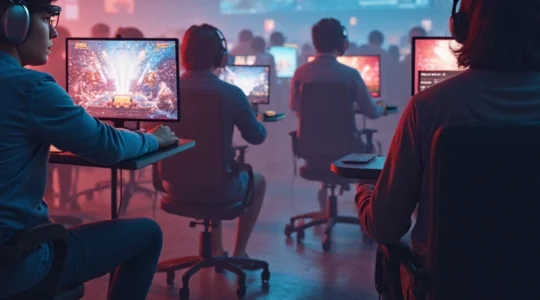
Mobile gaming is now a serious contender in the industry
The landscape of the gaming industry has undergone a dramatic transformation in recent years, with mobile gaming emerging as a formidable force. Once dismissed as casual entertainment, mobile games have evolved into sophisticated experiences that rival their console and PC…
Lire la suite
What makes a great multiplayer experience today?
Multiplayer gaming has evolved significantly in recent years, transforming from simple competitive matches to immersive, dynamic experiences that captivate players for hours on end. The best multiplayer games today offer a perfect blend of cutting-edge technology, engaging gameplay mechanics, and…
Lire la suite
How does the right game controller improve gameplay?
In the world of gaming, the controller serves as the crucial interface between player and game. A well-designed controller can significantly enhance the gaming experience, providing comfort, precision, and immersion. As games become more complex and demanding, having the right…
Lire la suite